The Franchise Operator’s Guide to Equipment Liquidation
The Franchise Operator’s Guide to Equipment Liquidation
Managing a single restaurant is complex enough. For franchise operators, overseeing multiple locations introduces layers of logistical and financial challenges, especially when it comes to equipment. Whether you’re navigating a system-wide remodel, closing an underperforming unit, or simply managing surplus assets, a clear strategy for franchise equipment liquidation is essential. This guide provides a direct,…
Managing a single restaurant is complex enough. For franchise operators, overseeing multiple locations introduces layers of logistical and financial challenges, especially when it comes to equipment. Whether you’re navigating a system-wide remodel, closing an underperforming unit, or simply managing surplus assets, a clear strategy for franchise equipment liquidation is essential. This guide provides a direct, no-nonsense framework for franchisees and multi-unit operators to maximize financial returns, maintain brand integrity, and simplify the complex process of asset disposition.
Why a Standardized Liquidation Process Matters for Franchises
For an independent operator, selling a used convection oven might be a one-off task. For a franchisee, it’s part of a much larger operational ecosystem. A standardized approach to equipment liquidation isn’t just about efficiency; it’s about protecting your investment and your brand. Here’s why it’s critical:
- Financial Optimization: A consistent, market-driven process ensures you get the highest possible return for your assets, not just a lowball offer from a local dealer. This recovered capital can be reinvested into new locations, remodels, or operational improvements.
- Brand Integrity: What happens to your branded equipment after it leaves your facility? A haphazard sale could see your proprietary assets ending up in a competitor’s hands or misrepresented in the secondary market. A controlled process protects your brand’s image and intellectual property.
- Operational Efficiency: Managing a multi-unit closure or a dozen simultaneous remodels is a logistical nightmare without a system. A strategic partner can handle the entire process—from inventory to removal—freeing up your operations team to focus on their core responsibilities.
- Data and Compliance: Proper liquidation involves tracking asset disposition for accounting, tax purposes, and franchisor reporting. A standardized process provides clear documentation and a transparent chain of custody for every piece of equipment.
Key Scenarios for Franchise Equipment Liquidation
Liquidation isn’t just about closing down. For successful franchise systems, it’s a regular part of the business lifecycle. Understanding the different scenarios helps you plan ahead and choose the right strategy.
Scheduled Remodels & Brand Refreshes
Franchisors often mandate periodic remodels to keep the brand fresh. This means out with the old and in with the new. Instead of paying to haul away perfectly functional fryers, ice machines, and ovens, a liquidation plan turns those used assets into cash flow. This can significantly offset the capital expenditure of the remodel.
Location Closures or Refranchising
Closing a location is the most common trigger for a full-scale liquidation. The goal is to exit the facility on time, meeting all lease obligations, while recovering the maximum possible value from the equipment. This requires a fast, efficient, and thorough process that leaves the premises clean and empty.
Asset Redeployment and Management
Sometimes, a closing location’s three-compartment sink or walk-in cooler is exactly what a new location needs. An asset management strategy involves identifying, cataloging, and sometimes storing this equipment for redeployment within your own franchise network. This saves tremendous amounts on purchasing new equipment for future openings.
Managing Surplus and “Boneyards”
Over years of operation, franchises accumulate surplus equipment in storage—a “boneyard” of retired assets. These items take up valuable space and represent tied-up capital. A periodic, centralized liquidation can clear out this clutter and convert dormant assets back into working capital.
Your Liquidation Options: Pros and Cons
Franchise operators have several paths for liquidating equipment, each with distinct advantages and disadvantages. Choosing the right one depends on your timeline, volume of equipment, and internal resources.
Selling Locally (Marketplace, Craigslist)
- Pros: Potentially quick cash for a single, high-demand item. You control the price.
- Cons: Extremely time-consuming for an entire kitchen. You’ll deal with dozens of no-shows, hagglers, and security risks. It is not a scalable or professional solution for a full restaurant package.
Working with a Local Used Equipment Dealer
- Pros: They might buy everything in one lot, offering a fast exit.
- Cons: Dealers are resellers. Their business model is to buy low and sell high. You will receive a wholesale price, which is often 20-30 cents on the dollar of its true secondary market value. They may also cherry-pick the best items, leaving you to dispose of the rest.
Partnering with a Consignment-Based Liquidation Specialist
- Pros: This model is designed to maximize your return. A specialist markets your equipment to a national audience of buyers, creating competition that drives up prices. They manage the entire project—from inventory and marketing to payment collection and removal coordination. It’s a hands-off process that leverages market dynamics in your favor.
- Cons: Payment is received after the assets are sold, not upfront. The process is driven by a market timeline (e.g., a 7-10 day online auction) rather than an instant cash offer.
A professional, consignment-based approach is often the most strategic choice for franchises. Partners like TAGeX Brands operate on this model, ensuring their goals are aligned with yours: getting the highest possible price for your assets. You can learn more about how TAGeX works to see if this model fits your needs.
The Strategic Liquidation Process: A Step-by-Step Framework
A successful liquidation follows a proven methodology. Whether you handle it internally or with a partner, these are the essential steps.
1. Inventory and Valuation: You can’t sell what you don’t know you have. The first step is a detailed catalog of every asset, including make, model, serial number, dimensions, and condition. A professional valuation can provide an accurate forecast of the expected financial return for financial planning.
2. Decommissioning and Preparation: Equipment must be safely and professionally disconnected from gas, water, and electrical lines. A thorough cleaning also significantly increases its resale value. This step is critical for a smooth and safe removal process.
3. Marketing and Sale Execution: Reaching the right buyers is key. This requires high-quality photos, detailed descriptions, and exposure across multiple sales channels, such as online auction marketplaces like RestaurantEquipment.bid. A national reach almost always results in a higher return than a local-only sale.
4. Payment Collection and Removal Coordination: This is a critical logistical phase. The process includes managing all buyer inquiries, securely collecting payments, and scheduling a strict, orderly removal timeline to ensure the property is vacated by your deadline.
Common Mistakes Franchisees Make (And How to Avoid Them)
Over 38 years, we’ve seen operators make the same costly mistakes. Avoiding them can save you thousands.
- Waiting Too Long: The biggest mistake. A proper liquidation takes planning. If your lease ends in two weeks, your options become severely limited, and you’ll likely accept a lowball offer out of desperation. Start planning 60-90 days before your deadline.
- Underestimating the Logistics: Liquidation is more than putting a “for sale” sign up. It’s a project involving skilled labor for disconnection, coordination of dozens of buyers, risk management, and strict adherence to deadlines.
- Accepting a Quick-Cash Buyout: The temptation of a single check is strong, but a buyout offer from a dealer represents a fraction of your assets’ potential value. A managed, consignment-based sale exposes your equipment to a competitive market, ensuring you receive its true fair market value.
- Ignoring Redeployment Opportunities: Before you sell your commercial equipment, assess if any of it can be used in another of your locations. The cost savings of redeploying a three-year-old walk-in cooler versus buying a new one are enormous.
Maximize Your Return with a Strategic Partner
For franchise operators, managing equipment is a constant cycle. A strategic approach to liquidation transforms it from a logistical headache into a smart financial strategy. By planning ahead, understanding your options, and working with a partner who aligns with your goals, you can ensure a smooth process and maximize the capital recovered from your assets.
If you are managing a closure, planning a multi-unit remodel, or dealing with surplus equipment, the team at TAGeX Brands can help you build a liquidation and asset management strategy that works for you. Contact us for a no-obligation consultation to discuss your specific needs.
Related posts
Related posts
The latest from our blog
-
How to Sell Restaurant Equipment in Los Angeles, CA: A Local Operator’s Guide
In the dynamic and hyper-competitive Los Angeles dining scene, change is the only constant…. -
How to Sell Restaurant Equipment in Arlington, TX: A Local Operator’s Guide
The Arlington restaurant scene is as dynamic as they come, fueled by a constant… -
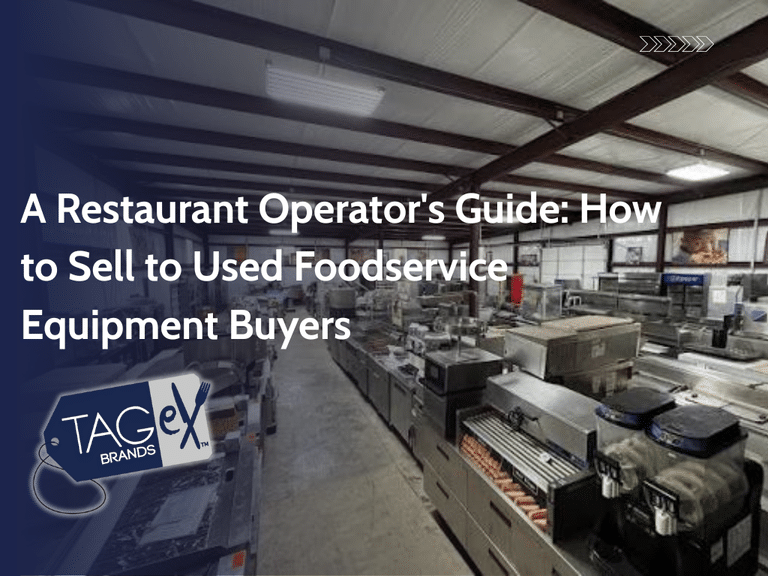
A Restaurant Operator’s Guide: How to Sell to Used Foodservice Equipment Buyers
Whether you’re closing a location, upgrading your kitchen, or managing surplus assets from a…