A Practical Guide to Restaurant Asset Recovery Services
A Practical Guide to Restaurant Asset Recovery Services
When you’re managing a restaurant, the term “asset recovery” can seem intimidating, often associated with the stress of a closure. However, effective restaurant asset recovery services are a crucial financial tool for any operator facing change—whether it’s a planned remodel, a strategic upgrade, a multi-unit consolidation, or the difficult decision to close your doors. The…
When you’re managing a restaurant, the term “asset recovery” can seem intimidating, often associated with the stress of a closure. However, effective restaurant asset recovery services are a crucial financial tool for any operator facing change—whether it’s a planned remodel, a strategic upgrade, a multi-unit consolidation, or the difficult decision to close your doors. The goal is simple: to convert surplus or unwanted commercial kitchen equipment back into working capital. It’s about maximizing the value of the assets you already own, but the process can be complex. Understanding your options and the realistic value of your equipment is the first step toward a successful outcome.
When Do You Need Restaurant Asset Recovery?
Asset recovery isn’t a one-size-fits-all service. It’s a strategic response to several common business scenarios that foodservice operators face. Recognizing your situation is key to choosing the right path forward. Most operators seek out restaurant asset recovery services during one of these key transitions:
1. Business Closure or Downsizing
This is the most common trigger. Whether it’s a single location or a multi-unit chain closure, you’re left with a building full of equipment that needs to be liquidated. The primary goal here is to recover as much capital as possible, often under a tight deadline imposed by a lease or financial pressures. A coordinated liquidation ensures that everything from the walk-in cooler to the dining room chairs is sold efficiently and removed on schedule, satisfying landlord requirements for a broom-swept condition.
2. Remodeling and Equipment Upgrades
Growth and modernization are positive, but they create surplus. When you upgrade your cookline, replace an aging HVAC system, or redesign your front-of-house, the old equipment still has value. Instead of paying to have it hauled away or letting it collect dust in storage, asset recovery allows you to sell these used items to fund the new project. This turns a cost center (removal) into a revenue stream.
3. Multi-Unit Redeployment and Consolidation
For chains and restaurant groups, equipment is constantly in motion. A closing store in one state might have the exact walk-in freezer a new location needs in another. Asset management services, a core part of recovery, involve inventorying, storing, and redeploying equipment across your own network. This saves immense capital by reducing the need to buy new equipment for every opening or remodel. When an item is no longer needed anywhere in the system, it can then be liquidated.
4. End-of-Lease and Site Turnovers
Landlords typically require a facility to be returned to its original condition, free of all equipment and fixtures. This process, known as decommissioning, can be a significant logistical challenge. Asset recovery services manage the entire removal process, ensuring that valuable items are sold and everything else is properly disposed of, meeting your legal obligations and avoiding costly penalties from the property owner.
Valuing Your Assets: What Is Your Equipment Really Worth in 2026?
One of the biggest hurdles in asset recovery is aligning expectations with reality. The price you paid for a new piece of equipment has little bearing on its value on the secondary market. Several factors determine the resale value of used commercial kitchen equipment:
- Brand and Model: Well-known, reliable brands like Hobart, True, and Vulcan retain more value than obscure or budget brands due to their reputation for durability and parts availability.
- Age and Condition: Is the equipment clean, well-maintained, and fully functional? Cosmetic issues can be overlooked, but mechanical problems will significantly drop the price. Equipment under 5 years old is most desirable.
- Market Demand: Some items are always in demand. Standard 6-burner ranges, convection ovens, and stainless-steel prep tables sell quickly. Niche or highly specialized equipment, like a sous-vide circulator or a specific type of ethnic cooking range, may have a smaller buyer pool.
Here are some realistic secondary market price ranges you might expect in 2026 for common, good-condition items sold via a professional liquidation marketplace:
- True T-49F 2-Door Reach-In Freezer: New Price: ~$5,500. Resale Value: $1,200 – $2,200
- Hobart A200 20-Quart Mixer: New Price: ~$7,000. Resale Value: $1,500 – $3,000
- Vulcan 6-Burner Gas Range with Standard Oven: New Price: ~$4,000. Resale Value: $800 – $1,500
- Hoshizaki KM-515MAH Ice Machine (Head only): New Price: ~$4,500. Resale Value: $1,000 – $1,800
Working with an asset valuation expert can give you a clear, data-backed assessment of your entire inventory, which is crucial for financial planning, insurance purposes, or M&A due diligence.
The Asset Recovery Process: A Step-by-Step Breakdown
A professional asset recovery process is designed to be systematic and hands-off for the operator. While every project is unique, the core stages remain consistent.
1. Initial Consultation & Strategy: The process begins with a discussion to understand your goals, timeline, and challenges. Are you facing a hard deadline from a landlord? Do you need to redeploy assets to other locations? This initial discovery phase shapes the entire project.
2. Inventory and Cataloging: A team will photograph, document, and catalog every single asset. This includes capturing model numbers, serial numbers, dimensions, and condition notes. This data is essential for creating accurate listings and marketing materials.
3. Marketing and Sale Execution: Once the inventory is complete, a custom marketing plan is developed. The assets are launched across multiple national sales channels—from online auction marketplaces like RestaurantEquipment.bid to platforms like eBay—to reach the largest possible audience of qualified buyers.
4. Sale Management: The recovery partner handles all buyer inquiries, manages the bidding or sales process, and collects all payments. This removes the burden of dealing with hundreds of potential buyers from your shoulders.
5. Coordinated Removal and Logistics: After the sale concludes, the partner coordinates a scheduled removal window for buyers. They manage the logistics on-site to ensure a smooth, orderly, and safe process that respects the property and meets your deadline.
6. Final Reconciliation and Payment: Once all items are sold and removed, you receive a detailed final report and the net proceeds from the sale. A reputable partner operates on a consignment basis, meaning their success is tied directly to yours.
5 Common Mistakes to Avoid During Asset Recovery
Navigating an equipment liquidation can be tricky. Here are five common pitfalls restaurant operators should avoid:
- Holding Unrealistic Price Expectations: Expecting to get 50-70% of the original purchase price is a common mistake. The secondary market is driven by supply and demand, and depreciation is significant.
- Attempting to Sell Piece-by-Piece Yourself: While it seems like a way to maximize returns, managing dozens of individual listings, answering countless questions, and coordinating separate pickups is a full-time job that can distract you from running your business or managing the closure.
- Ignoring Removal Timelines and Costs: Selling an item is only half the battle. You must have a clear plan for how and when it will be removed. Failing to meet a lease-end deadline can result in thousands of dollars in penalties.
- Poor Documentation and Photography: Vague descriptions and blurry photos will deter buyers and lower the final sale price. Professional cataloging is essential for building buyer confidence.
- Choosing the Wrong Partner: Be wary of anyone offering a lowball cash buyout for your entire inventory. This often leaves significant money on the table. A consignment partner is motivated to achieve the highest possible price for you.
How TAGeX Brands Streamlines Your Asset Recovery
For over 30 years, TAGeX Brands has specialized in helping foodservice operators manage complex situations requiring restaurant asset recovery services. We don’t buy your equipment; we partner with you to sell it for its true market value through a proven consignment model. This approach ensures our goals are perfectly aligned with yours: to maximize your financial return.
Our process is designed to be completely hands-off for you. The comprehensive service we provide is central to what we do for our clients. It starts with our team meticulously cataloging every asset. We then develop a strategic marketing plan and launch your equipment across our powerful network of sales channels, which receive up to one million views per day. This nationwide exposure is why we have a 98.5% successful sales rate.
Throughout the sale, we manage all buyer communication, payment collection, and the complex logistics of on-site removal. Our goal is to help you successfully sell your commercial equipment with zero hassle. Whether you’re liquidating a single site, managing surplus for a growing chain, or need a full facility decommission, our team handles every detail from start to finish. After the project is complete, we provide a transparent report and remit the proceeds directly to you.
Start Your Asset Recovery Conversation
Facing an equipment transition can be daunting, but you don’t have to handle it alone. Whether you’re planning for the future or need immediate assistance, a conversation with an experienced partner can provide clarity and a path forward. Contact the experts at TAGeX Brands today for a no-obligation consultation to discuss your specific situation and learn how we can help you recover the maximum value from your assets.
Related posts
Related posts
The latest from our blog
-
How to Sell Restaurant Equipment in Los Angeles, CA: A Local Operator’s Guide
In the dynamic and hyper-competitive Los Angeles dining scene, change is the only constant…. -
How to Sell Restaurant Equipment in Arlington, TX: A Local Operator’s Guide
The Arlington restaurant scene is as dynamic as they come, fueled by a constant… -
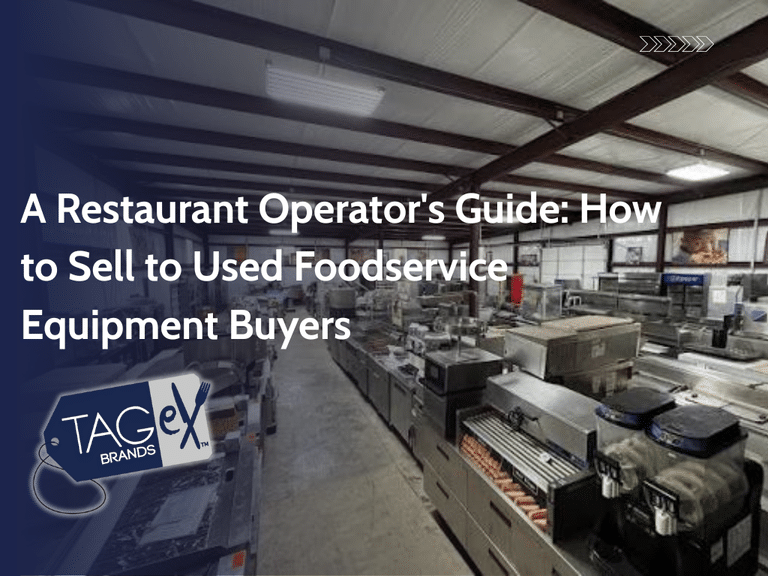
A Restaurant Operator’s Guide: How to Sell to Used Foodservice Equipment Buyers
Whether you’re closing a location, upgrading your kitchen, or managing surplus assets from a…