A Restaurant Operator’s Guide: How to Sell to Used Foodservice Equipment Buyers
A Restaurant Operator’s Guide: How to Sell to Used Foodservice Equipment Buyers
Whether you’re closing a location, upgrading your kitchen, or managing surplus assets from a multi-unit chain, the task of selling used commercial equipment can feel overwhelming. You need to clear the space, recover capital, and do it all on a tight timeline. The key to success is understanding how to sell to used foodservice equipment…
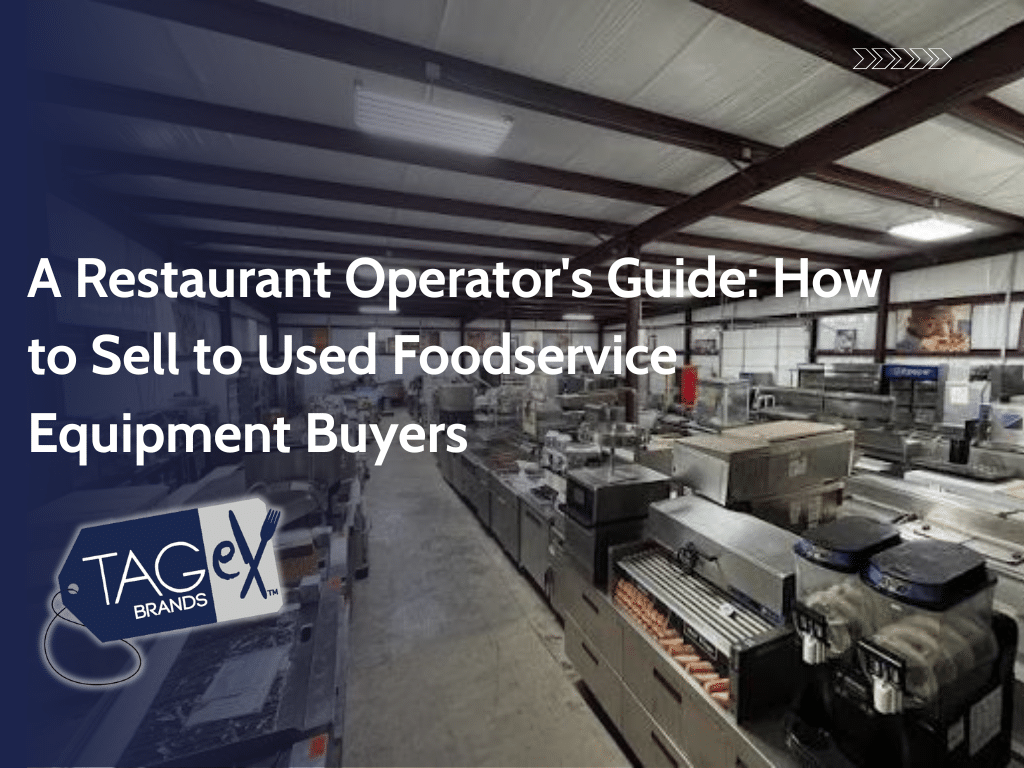
Whether you’re closing a location, upgrading your kitchen, or managing surplus assets from a multi-unit chain, the task of selling used commercial equipment can feel overwhelming. You need to clear the space, recover capital, and do it all on a tight timeline. The key to success is understanding how to sell to used foodservice equipment buyers effectively. This isn’t about just listing items online; it’s about finding the right partner and process to maximize your return with minimal disruption to your operations. This guide breaks down the options, valuations, and common pitfalls to help you make the best decision for your business.
Understanding Your Options: Who Are the Buyers?
When you need to liquidate assets, not all buyers are created equal. Each comes with a different process, timeline, and potential return. Understanding these distinctions is the first step in creating a successful sales strategy.
Local Used Equipment Dealers
These are the companies that buy equipment outright, refurbish it, and resell it from their own showroom or warehouse. The primary advantage here is speed. A dealer can often make you a cash offer for your entire package and remove it quickly. However, this speed comes at a cost. Dealers must buy low to cover their overhead—transportation, repairs, storage, sales staff, and profit margin. You can expect offers to be significantly lower than the equipment’s potential market value, often pennies on the dollar.
Direct-to-Consumer Marketplaces
Platforms like Facebook Marketplace, Craigslist, or eBay allow you to sell directly to other operators. This route offers the potential for the highest sale price per item, as you cut out the middleman. The major downside is the immense amount of work involved. You are responsible for everything: cleaning the equipment, taking professional photos, writing detailed descriptions, answering dozens of questions from potential buyers, negotiating prices, processing payments, and coordinating complicated removal logistics. Selling a full kitchen this way can take months and become a full-time job.
Auction Houses and Consignment Partners
This category represents a middle ground that balances value and convenience. Instead of buying your equipment, a consignment partner manages the entire sales process on your behalf. They leverage established national marketplaces to expose your assets to thousands of qualified buyers, creating a competitive bidding environment that drives up prices. While you don’t receive an upfront cash offer, the final proceeds are often significantly higher than a dealer’s buyout price. This is the ideal option for operators who want to maximize their financial return without managing the complexities of the sale themselves.
What’s Your Used Equipment Actually Worth in 2026?
Setting realistic price expectations is crucial. The price you paid for a new piece of equipment has little bearing on its resale value. The secondary market is driven by brand reputation, condition, age, and current demand. Well-maintained equipment from leading brands like True, Hobart, Vulcan, and Hoshizaki will always command higher prices.
Here are some realistic valuation ranges you might expect in the 2026 used market, assuming the equipment is clean and in good working order:
- Commercial Refrigeration (e.g., True T-49 Reach-In): A new unit can cost over $5,000. On the used market, a 3-5 year old model might sell for $1,200 – $2,200. An older or less-known brand might only fetch $400 – $800.
- Convection Ovens (e.g., Blodgett or Vulcan): New double-stack gas models can run $15,000+. A used one in good condition could be auctioned for $2,500 – $5,000.
- Commercial Ice Machines (e.g., Hoshizaki or Manitowoc): A 500 lb. air-cooled cube ice machine with a bin can be a high-demand item. Depending on age and maintenance history, expect a resale value of $1,500 – $3,000.
- 6-Burner Gas Range with Standard Oven: These are workhorses and common on the used market. A respected brand like Vulcan or Wolf might sell for $800 – $1,500, while a generic brand may only bring $300 – $600.
Remember, these are just estimates. The final sale price depends on the competitive bidding environment a professional sales partner can create.
The Sales Process: A Step-by-Step Timeline
Regardless of which type of buyer you choose, the process of liquidating equipment follows a general path. Knowing what to expect can help you plan accordingly, especially if you’re facing a lease-end deadline.
- Inventory & Assessment (1-3 days): The first step is to create a detailed list of every asset you intend to sell. This includes the make, model, serial number, dimensions, and notes on its condition. Take clear photos from multiple angles. This is the foundation of a successful sale.
- Decommissioning & Cleaning (2-5 days): All equipment must be properly disconnected from gas, water, and electrical lines by qualified professionals. It should then be thoroughly cleaned. Buyers are far more likely to bid on equipment that looks well-cared-for.
- Marketing & Sale Period (7-21 days): This is when your equipment is listed and promoted to potential buyers. If you work with a consignment partner, they handle all marketing, field all questions, and manage the bidding process across their sales channels.
- Payment & Collection (3-5 days): After a sale or auction closes, the buyer submits payment. Once funds are secured, the removal process can be scheduled.
- Coordinated Removal (1-3 days): This is often the most challenging logistical phase. Buyers must be scheduled to arrive with the right vehicles, equipment (like dollies and pallet jacks), and manpower to safely remove heavy items without damaging your facility. A professional liquidator will manage this entire process.
Understanding this timeline shows that a full liquidation is not an overnight process. A well-managed sale, from inventory to final removal, typically takes 2-4 weeks. To understand how an experienced partner can streamline this, you can learn more about how TAGeX works to manage every step for you.
5 Common Mistakes When Selling Used Equipment
Navigating the liquidation process can be tricky, especially for the first time. Here are five common mistakes operators make when trying to find used foodservice equipment buyers and how to avoid them.
- Holding Unrealistic Price Expectations: Expecting to get 50% or more of the original purchase price is rarely feasible. Research comparable used items and trust the market data from your sales partner.
- Providing Poor Documentation and Photos: Blurry photos or a lack of model numbers will deter serious buyers and lower bids. Invest the time to present your assets professionally.
- Ignoring Decommissioning & Removal Costs: Forgetting to budget for licensed plumbers and electricians or the logistics of moving a 1,000-pound walk-in cooler can lead to costly surprises.
- Choosing the Wrong Sales Channel: Trying to sell a complete kitchen’s worth of high-value equipment on Craigslist is inefficient and attracts unreliable buyers. Match the sales channel to the scale and value of your assets.
- Failing to Vet Your Partner: Don’t just go with the first company that offers to buy your equipment. Ask about their process, marketing reach, sales success rate, and how they handle logistics. A cheap, fast offer may cost you more in the long run.
How TAGeX Brands Can Help
For over 30 years, TAGeX Brands has been the trusted partner for restaurant operators navigating complex equipment challenges. We don’t act like typical used foodservice equipment buyers who make lowball offers. Instead, we operate on a consignment model designed to maximize your return. Our process is transparent and completely hands-off for you.
Here’s how it works:
- We Inventory Your Assets: Our team comes on-site (or guides you via our mobile app) to professionally photograph and catalog every piece of equipment, capturing all the data needed for a successful sale.
- We Market to a National Audience: We develop a custom marketing plan and launch your assets across our powerful sales channels—including our flagship marketplace, RestaurantEquipment.bid, and our top-rated eBay store. Your items are exposed to up to one million views per day from qualified buyers across the country.
- We Manage the Entire Sale: We handle all buyer inquiries, collect payments, and manage the complex logistics of scheduled removal from your facility. With a 98.5% successful sales rate, you can be confident your assets will sell.
- We Remit the Proceeds to You: Once the sales are complete and the equipment is removed, we send you the net proceeds. You get the benefit of our market expertise and national reach without any of the hassle.
If you’re ready to explore a hands-off solution, you can learn more about how to sell your commercial equipment with a proven partner.
Take the Next Step
Don’t let the pressure of a closure, remodel, or surplus inventory overwhelm you. Let a team of experienced professionals handle the entire process, so you can focus on what’s next for your business. Contact TAGeX Brands today for a no-obligation consultation to discuss your specific situation and learn how we can help you achieve the highest possible return for your used foodservice equipment.
Related posts
Related posts
The latest from our blog
-
Retirement Exit for Restaurant Owners: How to Liquidate Your Commercial Kitchen
After decades of long hours, early mornings, and dedication, retirement is on the horizon…. -
How to Sell Used Restaurant Equipment in Romulus, NY: A Local Operator’s Guide
For restaurant operators in Romulus, New York, managing surplus kitchen assets can be a… -
Sell Restaurant Equipment in Orlando, FL: An Operator’s Guide to Maximum Recovery
Orlando’s hospitality scene is one of the most dynamic and competitive in the country….