
Your Guide to Selling Surplus Restaurant Equipment After a Remodel, Upgrade, or Closure
Your Guide to Selling Surplus Restaurant Equipment After a Remodel, Upgrade, or Closure
Whether you’ve just completed a major kitchen remodel, upgraded a key equipment line, or are consolidating locations, you’re likely facing the same challenge: what to do with the equipment you no longer need. Selling surplus restaurant equipment is more than just clearing out space; it’s a critical business decision that can recover significant capital, reduce…
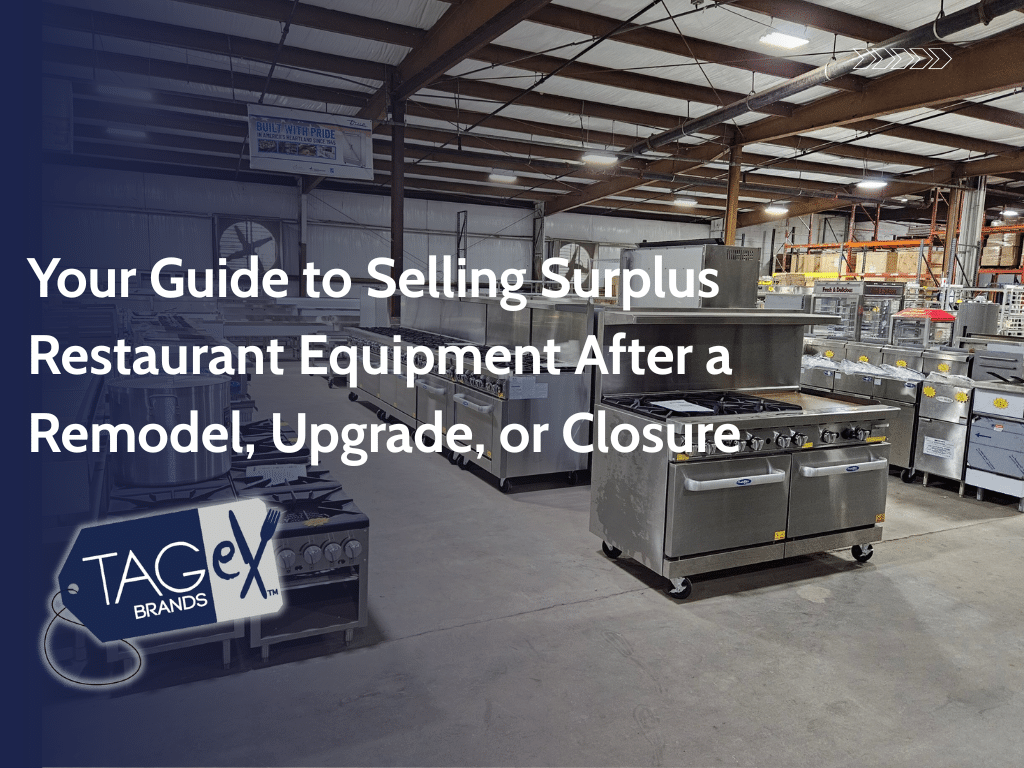
Whether you’ve just completed a major kitchen remodel, upgraded a key equipment line, or are consolidating locations, you’re likely facing the same challenge: what to do with the equipment you no longer need. Selling surplus restaurant equipment is more than just clearing out space; it’s a critical business decision that can recover significant capital, reduce holding costs, and streamline your operations. However, the process is filled with logistical hurdles and valuation pitfalls. This guide provides a clear, operator-focused roadmap for turning your used commercial kitchen assets into working capital, efficiently and effectively.
The Core Challenge: Idle Assets vs. Recovered Capital
Surplus equipment isn’t just taking up space in a storage unit or the back of your facility—it’s a depreciating asset that costs you money every day. The primary challenge for any operator is weighing the costs of inaction against the benefits of a strategic liquidation plan. Idle equipment incurs storage fees, insurance costs, and loses value over time. A three-year-old convection oven that’s been sitting in storage for another two years is now a five-year-old oven with a significantly lower market value. The goal is to convert these non-performing assets back into cash you can reinvest into your business, whether that’s for marketing, new technology, or paying down debt. Making the decision to sell is the first and most important step in asset recovery.
What Is Your Surplus Equipment Actually Worth? A Realistic Valuation
One of the biggest mistakes operators make is overvaluing their used equipment. The price you paid is irrelevant to the secondary market. Value is determined by brand, age, condition, and current demand. As of 2026, the used market is robust, but buyers are savvy. Here are some realistic price ranges for common surplus items in good, working condition:
- Commercial Refrigeration: A True or Turbo Air two-door reach-in refrigerator might sell for $1,200 – $2,500, compared to a new price of $5,000+. Walk-in coolers are highly variable and depend on size and compressor condition, often ranging from $2,000 to $7,000.
- Cooking Equipment: A workhorse brand like a Vulcan or Blodgett double-stack convection oven could fetch $2,500 – $5,000. A 6-burner gas range with an oven base might bring in $800 – $1,800. Fryers from brands like Pitco can sell for $500 – $1,500 per unit depending on size and features.
- Food Prep Equipment: A 30-quart Hobart mixer, a staple in many kitchens, could be worth $2,000 – $4,500. A used commercial slicer or food processor might sell for $400 – $1,000.
- Warewashing: A high-temp undercounter dishwasher can range from $1,500 – $3,000, while a larger conveyor model requires a more specialized buyer and valuation.
Remember, these are ballpark figures. Professional asset valuation services can provide a precise assessment, which is crucial for financial planning, insurance purposes, or large-scale liquidations.
The Liquidation Process: From On-Site to Payout
Once you’ve decided to sell, you need a clear process. While you can try to sell pieces individually on local marketplaces, this approach is time-consuming, attracts unreliable buyers, and often leaves you with unsold items. A structured liquidation strategy is far more effective. The process generally involves several key stages, whether you handle it yourself or partner with a specialist. If you’re looking for a managed solution to sell your commercial equipment, finding a partner who handles these steps is key.
Step 1: Inventory and Documentation
Create a detailed list of every item for sale. For each piece, capture the manufacturer, model number, serial number, dimensions, and any notes on its condition. Take clear, well-lit photos from multiple angles, including close-ups of the data plate, any cosmetic damage, and the interior. This documentation is non-negotiable for attracting serious buyers and achieving fair market value.
Step 2: Marketing and Sale
The equipment needs to be marketed where qualified buyers are looking. This could include online auction sites, industry forums, or direct outreach. A broad marketing strategy that leverages multiple national sales channels will yield the best results, creating a competitive bidding environment that drives up the final sale price.
Step 3: Managing Inquiries and Payments
Once listed, you will field questions from potential buyers about electrical specifications, operating condition, and logistics. You’ll need a secure system for collecting payments and issuing invoices.
Step 4: Coordinating Removal and Shipping
This is often the most underestimated part of the process. The buyer is typically responsible for removal, but you must coordinate access, ensure the proper tools are used to avoid damaging your facility, and verify the correct items are taken. This requires careful scheduling and oversight.
Common Mistakes When Selling Surplus Restaurant Equipment
Navigating the surplus equipment market can be tricky. Here are some common mistakes operators make that cost them time and money:
- Setting Unrealistic Prices: Basing your asking price on what you originally paid or your emotional attachment to the equipment will deter buyers. Research comparable sales on auction sites to set a competitive price.
- Poor Photography and Descriptions: Grainy photos taken in a dark storage room and vague descriptions will get you lowball offers. Professional, detailed listings build buyer confidence.
- Ignoring the Cost of Logistics: Failing to account for the labor and equipment needed for disconnection, removal, and shipping can eat into your profits.
- Waiting Too Long to Sell: The longer equipment sits, the more it depreciates. Proactive asset management is always more profitable than reactive selling during a crisis.
- Using a Single Sales Channel: Listing on just one local marketplace severely limits your buyer pool. A multi-channel approach reaches a national audience, increasing competition and final value.
- Failing to Clean the Equipment: Dirty equipment looks poorly maintained and signals potential problems. A thorough cleaning can significantly increase the perceived value and final sale price.
- Choosing the Wrong Partner: Some companies will offer a low, quick buyout price. A consignment partner works to get you the highest possible market value because their success is tied to yours.
How TAGeX Brands Can Help
For over 30 years, TAGeX Brands has specialized in helping foodservice operators manage and liquidate their surplus assets through a proven, hands-off consignment model. We don’t buy your equipment; we partner with you to sell it for the highest possible return on the open market. Our comprehensive approach covers every step of the process, allowing you to focus on your core business. You can learn more about how TAGeX works and our full suite of services, from On-Site Asset Liquidation to Centralized Asset Management.
Here’s how our process works:
- Inventory & Documentation: Our team comes to your location (or uses our proprietary app) to professionally photograph and catalog every asset, capturing all the critical data needed for a successful sale.
- Strategic Marketing & Sale: We develop a custom marketing plan and launch your equipment across our national sales channels, including our flagship marketplace RestaurantEquipment.bid, eBay, and more. This network generates up to one million views per day, ensuring maximum exposure.
- Full-Service Management: We handle all buyer inquiries, collect all payments securely, and manage the entire removal and pickup schedule. With a 98.5% successful sales rate, you can be confident your assets will sell.
- Final Proceeds: Once the sales are complete and the items are removed, we process the funds and remit the net proceeds directly to you. It’s a completely transparent and hassle-free process.
Ready to Convert Your Surplus Equipment into Capital?
Don’t let your surplus equipment sit idle and lose value. The team at TAGeX Brands is ready to provide a no-obligation consultation to discuss your specific situation and outline a strategy to maximize your recovery value. Contact us today to learn how we can help you manage your commercial kitchen assets more effectively.
Related posts
Related posts
The latest from our blog
-
How to Sell Restaurant Equipment in Los Angeles, CA: A Local Operator’s Guide
In the dynamic and hyper-competitive Los Angeles dining scene, change is the only constant…. -
How to Sell Restaurant Equipment in Arlington, TX: A Local Operator’s Guide
The Arlington restaurant scene is as dynamic as they come, fueled by a constant… -
A Restaurant Operator’s Guide: How to Sell to Used Foodservice Equipment Buyers
Whether you’re closing a location, upgrading your kitchen, or managing surplus assets from a…