A Complete Guide to Selling Used Commercial Kitchen Equipment
A Complete Guide to Selling Used Commercial Kitchen Equipment
Whether you’re closing a location, upgrading your kitchen, or managing surplus assets from a multi-unit chain, the task of selling used commercial kitchen equipment can feel daunting. The process is often complex, time-consuming, and fraught with logistical hurdles. Getting it right, however, means recovering significant capital that can be reinvested into your business. Getting it…
Whether you’re closing a location, upgrading your kitchen, or managing surplus assets from a multi-unit chain, the task of selling used commercial kitchen equipment can feel daunting. The process is often complex, time-consuming, and fraught with logistical hurdles. Getting it right, however, means recovering significant capital that can be reinvested into your business. Getting it wrong means leaving thousands of dollars on the table. This guide provides a practical, no-nonsense roadmap for operators navigating this process, outlining your options, realistic valuations, and common pitfalls to avoid.
The Three Main Paths: Your Options for Selling Equipment
When you decide it’s time to sell, you generally have three avenues to pursue. Each comes with a distinct set of pros and cons, and the best choice depends on your timeline, resources, and desired level of involvement.
1. Selling Privately (The DIY Method)
This involves listing your equipment yourself on platforms like Facebook Marketplace, Craigslist, or local restaurant forums. On the surface, it seems appealing because you keep 100% of the sale price. However, this path requires the most hands-on effort. You’ll be responsible for taking photos, writing detailed descriptions, answering endless questions from potential buyers, negotiating prices, and dealing with payment processing. The biggest challenge is often coordinating the removal and managing the liability of having buyers—who may not be professional movers—de-installing and hauling away heavy equipment from your property.
2. Selling to a Used Equipment Dealer
Contacting a local used equipment dealer or reseller is often the fastest way to get cash. They will typically make a single offer for a package of items and handle all the removal logistics. The convenience, however, comes at a steep cost. Dealers are running a business and need to acquire inventory at a low enough price to cover their overhead, repairs, and still make a profit on resale. You can expect to receive a fraction of the equipment’s true secondary market value—often just pennies on the dollar.
3. Partnering with a Consignment or Auction Service
A professional liquidation partner operates on a consignment model, managing the entire sales process on your behalf. Instead of buying your equipment outright, they market it to a national audience of buyers through established online marketplaces. This approach maximizes your potential return by creating a competitive bidding environment. While you don’t receive an upfront payment, you benefit from a completely hands-off process and a much higher sell-through rate. A good partner handles everything from inventory and marketing to payment collection and coordinating pickup, ultimately remitting the proceeds to you after the sale.
What’s It Worth? Valuing Your Used Kitchen Equipment in 2026
One of the biggest mistakes operators make is having unrealistic price expectations. Commercial equipment depreciates quickly, and its value is determined by several key factors: brand, age, condition, and current market demand. A well-maintained Hobart mixer will always command a higher price than an off-brand equivalent. Here are some realistic secondary market price ranges you might expect for common items in good, working condition:
- Commercial Reach-In Refrigerator (2-Door): Brands like True or Traulsen can fetch $800 – $2,500.
- 6-Burner Gas Range with Oven: Depending on the brand and condition, expect $500 – $1,500.
- Convection Oven (Single Deck, Gas): Popular models from brands like Blodgett or Vulcan can sell for $700 – $2,000.
- Planetary Mixer (20-Quart): A classic Hobart A200 can bring $1,200 – $3,000, a testament to its durability and reputation.
- Commercial Ice Machine (Undercounter): Expect $400 – $1,200, highly dependent on production capacity and brand.
- Stainless Steel Work Tables: These are always in demand and typically sell for $100 – $400 based on size and features like undershelves or backsplashes.
Remember, these are estimated final sale prices on a competitive marketplace. A dealer’s cash offer will be significantly lower.
The Liquidation Process: What to Expect Step-by-Step
A structured approach is crucial for a successful equipment sale. Whether you do it yourself or hire a partner, the fundamental steps are the same. A professional service simply executes them for you. Understanding this process is key to making an informed decision about how to proceed.
Step 1: Inventory and Assessment. The first step is creating a detailed catalog of every asset you intend to sell. This includes the item type, brand, model number, serial number, dimensions, and a clear assessment of its condition. Good data is the foundation of a successful sale.
Step 2: Cleaning and Preparation. Clean equipment sells faster and for a higher price. Thoroughly clean every piece, inside and out. Take clear, well-lit photos from multiple angles. Be upfront about any known defects or issues—transparency builds trust with buyers.
Step 3: Marketing and Listing. This is where you connect your items with potential buyers. If you’re selling DIY, this means creating individual listings. If you’re using a partner, they will develop a comprehensive marketing strategy, leveraging their channels to reach a national audience.
Step 4: Managing the Sale. This stage involves fielding inquiries, negotiating prices (or managing an auction), and securely processing payments. It’s the most time-consuming part of the DIY process.
Step 5: Coordinating Pickup and Removal. Once an item is sold, you must coordinate a pickup time. You need to ensure the buyer arrives with the appropriate vehicle, tools, and manpower to remove the equipment safely and without damaging your facility. A professional partner handles all this coordination. You can see a detailed overview of how a managed process works to understand the full scope of what’s involved.
Common Mistakes When Selling Used Commercial Kitchen Equipment
Navigating an equipment sale can be tricky. Here are some common pitfalls operators encounter that can cost them time and money:
- Having Unrealistic Price Expectations: Expecting to recoup 50-70% of the original purchase price is rarely feasible. Research current market values for used equipment.
- Poor Photography and Descriptions: Dark, blurry photos and vague descriptions (e.g., “used oven”) deter buyers. Provide model numbers and clear pictures.
- Ignoring Removal Logistics: Forgetting that a 700-pound combination oven requires a specialized moving crew and can’t be picked up in a pickup truck.
- Accepting the First Lowball Offer: Taking a dealer’s quick-cash offer out of desperation without exploring the true market value through a consignment or auction platform.
- Underestimating the Time Commitment: The DIY approach can consume dozens of hours you may not have, especially if you’re also managing a business closure or renovation.
- Failing to Clean the Equipment: Dirty, grease-covered equipment signals neglect and will dramatically lower the sale price.
- Trying to Sell Broken or Obsolete Items: Some equipment is simply at the end of its useful life. Be honest about what is functional and what is best suited for scrap.
How TAGeX Brands Can Help
For over 30 years, TAGeX Brands has specialized in helping foodservice operators manage and liquidate their equipment assets with a proven, hands-off consignment process. We don’t buy your equipment; we partner with you to sell it for the highest possible return on the open market. Our model is built to solve the challenges outlined above. Here’s how it works:
First, our team organizes, photographs, and catalogs every asset, creating a detailed inventory. We then develop a customized marketing plan and launch your items across our national sales channels—including our flagship auction marketplace, RestaurantEquipment.bid, and our top-rated eBay store—reaching up to one million potential buyers per day. With a 98.5% successful sales rate, we know how to connect your assets with the right buyers. We handle all inquiries, collect all payments, and coordinate a seamless, professional removal process. After the sales are complete, the net proceeds are remitted directly to you. This approach makes the entire process of selling used commercial kitchen equipment completely turnkey for you.
Get a No-Obligation Assessment of Your Equipment
Whether you have a single piece of surplus equipment or need to clear out an entire facility, our team can provide a solution tailored to your needs. If you’re ready to explore your options and want to see how we can help you sell your commercial equipment, contact us today. Let’s have a conversation about your specific situation and how we can help you maximize your recovery value with zero hassle.
Related posts
Related posts
The latest from our blog
-
Retirement Exit for Restaurant Owners: How to Liquidate Your Commercial Kitchen
After decades of long hours, early mornings, and dedication, retirement is on the horizon…. -
How to Sell Used Restaurant Equipment in Romulus, NY: A Local Operator’s Guide
For restaurant operators in Romulus, New York, managing surplus kitchen assets can be a… -
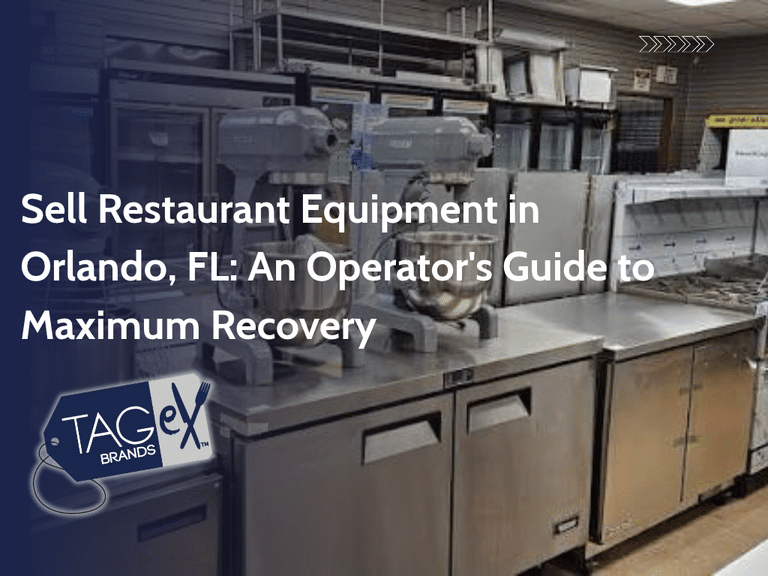
Sell Restaurant Equipment in Orlando, FL: An Operator’s Guide to Maximum Recovery
Orlando’s hospitality scene is one of the most dynamic and competitive in the country….